Heavy Snowfall Turns the Tateyama Range Into a Natural Water Reservoir
A Lifegiving Source That Enriches Both Land and Sea Natural Fixed Net
When discussing Toyama’s sushi culture and gastronomy, the Tateyama Mountain Range and the Hida Highlands are inextricably linked.
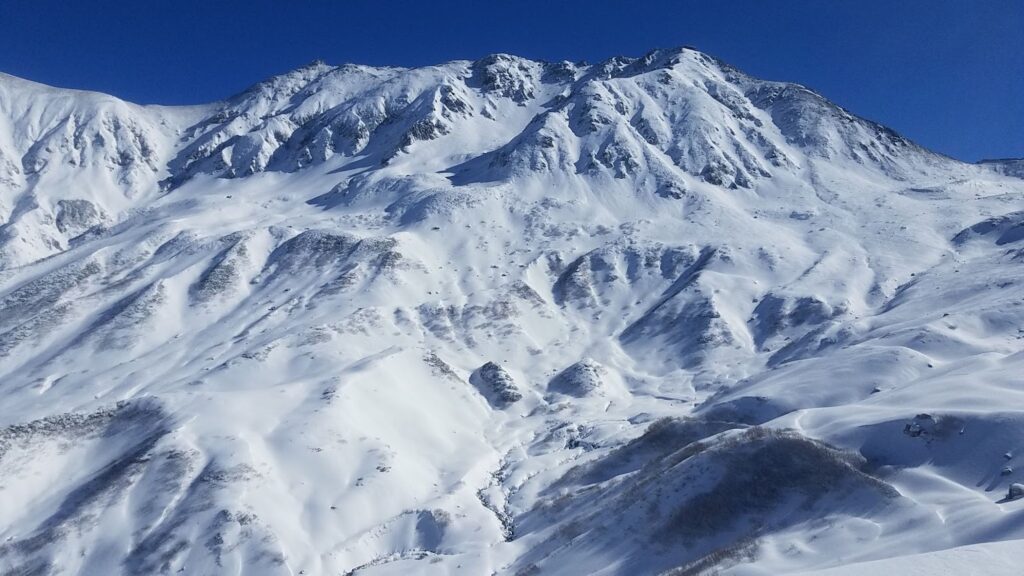
The Tateyama Mountain Range, part of the Northern Alps, rises to elevations of around 3,000 meters, or about 9,800 feet, and continues to uplift even today. The neighboring Hida Highlands, with elevations of roughly 1,500 meters, or about 4,900 feet, together form the primary water sources for most of Toyama Prefecture’s seven major rivers.
In winter, seasonal winds blowing from far eastern Siberia cross the Sea of Japan and collide with these mountains, bringing some of the heaviest snowfall in the world. At Murodo, a key base for climbing Mount Tateyama, snow removal reveals towering snow walls known as the Snow Corridor. In deeper sections, these walls can reach nearly 20 meters, or about 66 feet, in height.
Annual precipitation in this region is estimated at around 20 billion tons, according to research by the University of Toyama. Of this, approximately 11 billion tons flow into rivers, nourishing farmland, forests, and countryside before eventually reaching Toyama Bay.
Another 4 billion tons seep into primeval mountain forests, becoming mineral rich groundwater that later springs up from the seabed of Toyama Bay.
The Tateyama Mountain Range is not simply a high alpine zone. It functions as a massive water reservoir, supplying water to both land and sea and supporting Toyama’s natural environment at its core.
A Source of Forest Nutrients
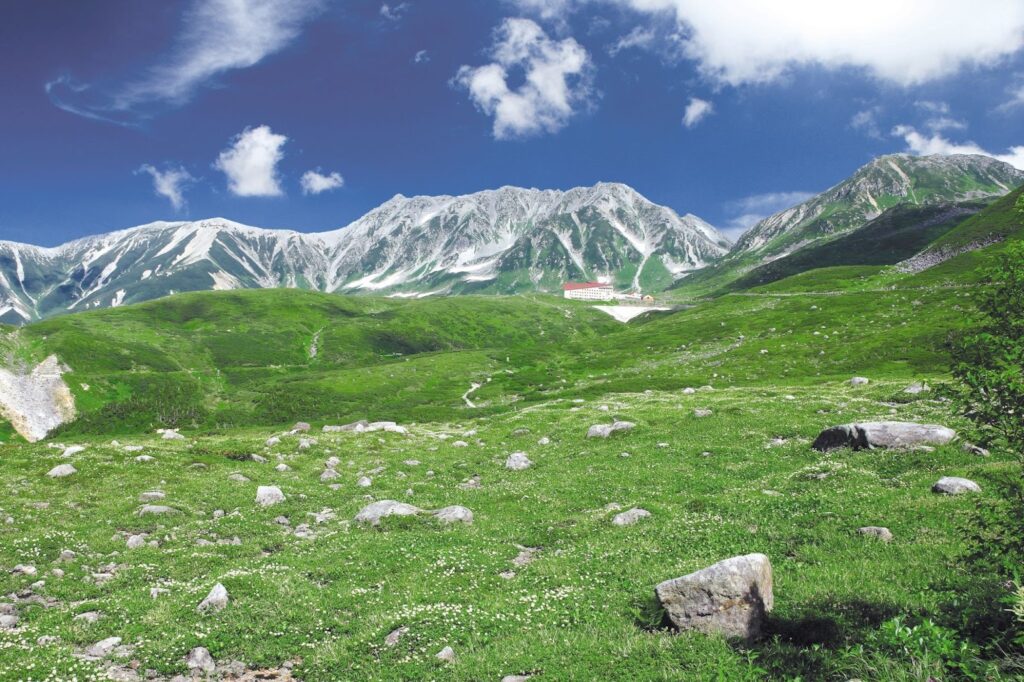
The value of the Tateyama Mountain Range and the Hida Highlands lies not only in their elevation and heavy precipitation. Equally important are the highly natural forests that spread across these mountain regions, which play a vital role in sustaining Toyama’s food culture, including sushi.
Toyama’s forests rank third nationwide in vegetation naturalness, following Hokkaido and Okinawa, and first on Honshu, the main island of Japan. These forests retain a high proportion of native plant life, with minimal human intervention.
Water flowing from these deep forests into Toyama Bay carries a wealth of forest nutrients, including nitrogen, phosphorus, potassium, and silica. The water cycle that begins in the Tateyama Mountain Range and the Hida Highlands delivers not only vast quantities of water to land and sea, but also essential nutrients that support marine ecosystems from within.
In the shallow layers of Toyama Bay, these nutrients fuel the growth of phytoplankton such as diatoms. As phytoplankton increase, zooplankton that feed on them also multiply, followed by fish that feed on zooplankton.
Seafood nurtured within this rich cycle of life forms the very foundation of Toyama’s sushi culture.
Photo courtesy of Toyama Tourism Organization
SHARE to SNS