Mochikaeri (Sushi Takeout / 持ち帰り): How to order and enjoy sushi takeout in Japan
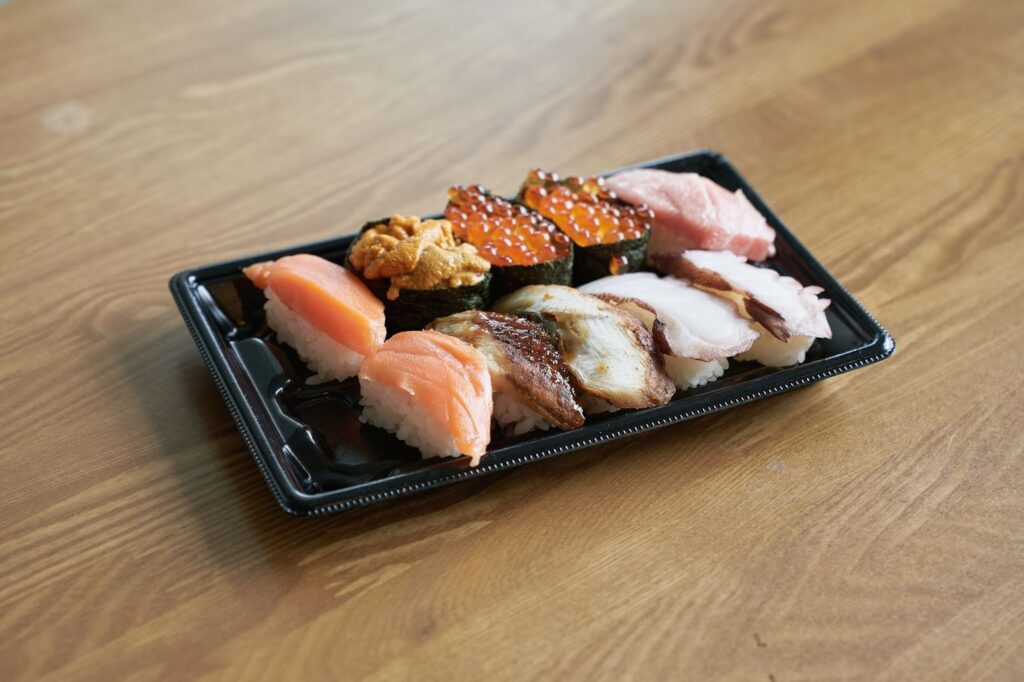

Mochikaeri, meaning takeout, is a convenient and popular way to enjoy sushi in Japan. You can order sushi to go from authentic sushi bars, kaiten sushi restaurants, or simply pick up fresh sushi at supermarkets. For travelers, bringing sushi back in a box or container is an easy and tasty meal option. This article walks you through how sushi takeout works in Japan and shares tips to help you enjoy mochikaeri sushi comfortably at your accommodation during your trip.
How to Order Sushi Takeout While Staying in Japan
While staying in Japan, you can order sushi takeout from a wide range of places, including conveyor-belt sushi restaurants, supermarkets, convenience stores and authentic sushi bars. Sushi takeout is typically packed in containers with several pieces of sushi, allowing you to enjoy it wherever you like.
Must-Know Japanese Phrases for Sushi Take-Out
Mochikaeri, or takeout, is convenient and easy to order even for travelers who do not speak much Japanese. Only a few simple phrases are needed when ordering at a sushi restaurant.
Ordering Sushi Take-Out at a Traditional Sushi Bar
Even at traditional sushi bars, mochikaeri, or takeout, is often available with just a few words. Making a reservation or ordering in advance is considerate, but even without one, you can usually request takeout. When you enter the restaurant, greet the staff and simply ask, “Mochikaeri OK?” If the chef or staff says yes, you can reply with “omakase.” If you do not speak much Japanese, ordering individual toppings can be difficult, and omakase, the chef’s selection, makes the process easy and smooth.
Ordering Sushi Take-Out at Conveyor Belt Sushi Restaurants
Mochikaeri, or sushi takeout, is especially easy at conveyor-belt sushi restaurants, as major chains offer online ordering. You can visit the website of a nearby conveyor-belt sushi restaurant, switch the language setting, and order your favorite items. When you arrive at the restaurant, the only phrases you may need are your name and arigatou (“thank you”).
Buying Sushi Take-Out at Supermarkets
Supermarkets sell a variety of sushi packs in the bento or prepared-food section. Simply find a nearby supermarket, choose the pack you like, and take it to the register. If you use a self-checkout machine, you won’t need to say anything to purchase your sushi takeout.
Sushi Take-Out Menus You Can Order
Sushi takeout is available for a wide variety of menus and toppings, allowing you to choose the types of sushi you like. Soy sauce and gari (pickled ginger) are usually included in a small plastic packet. However, soups such as arajiru and miso soup are often not available for takeout.
A Brief History of Sushi Take-Out in Japan
Nigiri sushi, or hand-pressed sushi, emerged during the late Edo period in the early 19th century. Sold at street stalls and small shops, it quickly gained popularity as a convenient snack or meal that people could buy and eat on the go, marking one of the earliest forms of sushi takeout rather than a purely sit-down experience.
After World War II, improvements in transportation and refrigeration allowed nigiri sushi to spread throughout Japan, further establishing sushi as a takeout option. Later, takeout-focused chains such as Kozouzushi helped expand the market among ordinary households. Today, sushi takeout is widely available, with most sushi restaurants and supermarkets offering it as a standard option.
Sushi Take-Out FAQs
Is Sushi Take-Out a Bad Idea? Pros and Cons
Sushi takeout is not unusual in Japan and is a widely accepted custom. While dining in at sushi restaurants is common, surveys show that roughly half of consumers regularly eat sushi purchased as takeout from places such as supermarkets. This suggests that sushi takeout is a well-established and everyday practice in Japan.
Is Sushi Take-Out Healthy?
The health impact of sushi takeout depends on individual health conditions and portion size, but sushi is generally regarded as a healthy meal. The fish used in sushi provide omega-3 fatty acids, which are associated with heart and brain health, while seaweed, known as nori in Japanese, offers iron, dietary fiber, and other nutrients.
At the same time, some large fish, such as tuna, may contain higher levels of mercury. For this reason, pregnant and nursing women are often advised to limit their consumption of high-mercury fish.
How Common Is Sushi Take-Out in Japan?
Sushi takeout is widely common in Japan, and surveys show that roughly half of consumers regularly eat sushi purchased as takeout from places such as takeout-focused sushi restaurants and supermarkets.
What Kind of Boxes or Containers Is Sushi Packed In?
The type of box or container used for sushi takeout depends on where you purchase it. Supermarkets and major sushi chains typically use plastic containers, while traditional sushi bars often prefer wooden or paper boxes known as sushi-ori.
Sushi Take-Out in Japan: A Traditional and Convenient Option
Sushi takeout in Japan is a traditional and convenient way to enjoy sushi. When traveling in Japan and eating at your hotel or while on the move, takeout sushi is readily available. Takeout is widely accepted, so feel free to order it without hesitation.
For those looking for delicious sushi takeout nearby, click this Sushi Near Me map.
Photo by Kenta Nakajima
Research Sources
Kodansha International. The Kodansha Bilingual Encyclopedia of Japan. Kodansha, Tokyo, Japan.
Kawahara, Kazuhisa. Yomu Sushi Oishii Hanashi: 108 Neta. Bungeishunju, Tokyo, Japan.
Iwanami Shoten. Kōjien Dictionary. Iwanami Shoten, Tokyo, Japan.
Heibonsha. The World Encyclopedia, Revised Edition. Heibonsha, Tokyo, Japan.
Japan Tourism Agency. Sushi: JTA Sightseeing Database. Japan Tourism Agency, Tokyo, Japan.
Tatsumi, Yoshiyuki, and Tsuchida, Mitose. Why Sushi in Toyama Is So Delicious. Hokkoku Shimbunsha, Toyama, Japan.
Nihon Keizai Shimbun. Nigiri Sushi: From Edo’s “Hot Dog Stands” — The Birth of Hand-Pressed Sushi in the Bunsei Era (1818–1830). Nihon Keizai Shimbun, Tokyo, Japan.
ARIGATO. What We Want to Tell You About the History of Sushi Restaurants. ARIGATO, Japan.
Maruha Nichiro Corporation. Consumer Survey on Conveyor-Belt Sushi 2025. Maruha Nichiro, Tokyo, Japan.
SHARE to SNS