A Partnership Between Nature and People Shapes Toyama’s Sushi Culture
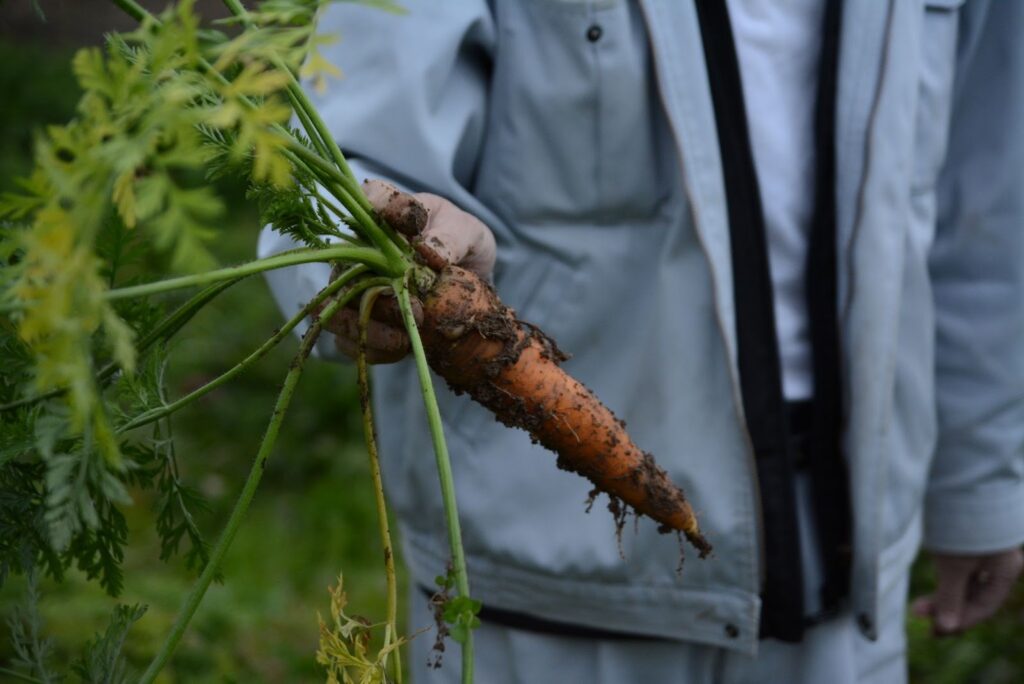
A Partnership Between the Land and Its People
Toyama’s sushi culture has been nurtured through an ongoing collaboration between nature and people.
The Tateyama Mountain Range, rising to nearly 3,000 meters or about 9,840 feet, and Toyama Bay, plunging to depths of more than 1,000 meters or about 3,280 feet, create a dramatic elevation difference of roughly 4,000 meters or about 13,120 feet. The natural bounty produced by this geography, combined with the perseverance and ingenuity of the people who have lived within it, has given rise to a food culture found nowhere else in Japan.
Even the diligence and spirit of trial and error that characterize the people of Toyama were shaped by this same natural environment. The Tateyama Mountain Range, which stores heavy snowfall and releases meltwater that nourishes mountains, fields and ecosystems on both land and sea, has long been a vital source of life. At the same time, it has remained an object of awe and fear.
Historical documents and domain records from the Edo period (1603–1868) vividly describe repeated hardships, including houses collapsing under heavy snow, poor harvests, and famine. In 1858, during the Hietsu earthquake, Mount Tonbiyama collapsed, triggering a massive disaster known as a mountain tsunami, in which enormous volumes of earth and debris surged into inhabited areas.
Memories of postwar heavy snowfall disasters, such as the Sanpachi Heavy Snow of 1963 and the Gouroku Heavy Snow of 1980 to 1981, are still passed down today. Even so, earlier generations persisted. Through repeated erosion control projects, river improvements on torrents known as unruly rivers, and the construction of irrigation canals, they gradually transformed this harsh land into fertile ground.
Alluvial fans once plagued by debris flows and flooding, and soils that drained too quickly for crops to grow, were eventually reborn as some of Japan’s leading rice producing areas. These lands became the foundation for local agriculture and regional food culture.
A Partnership Between the Sea and Its People
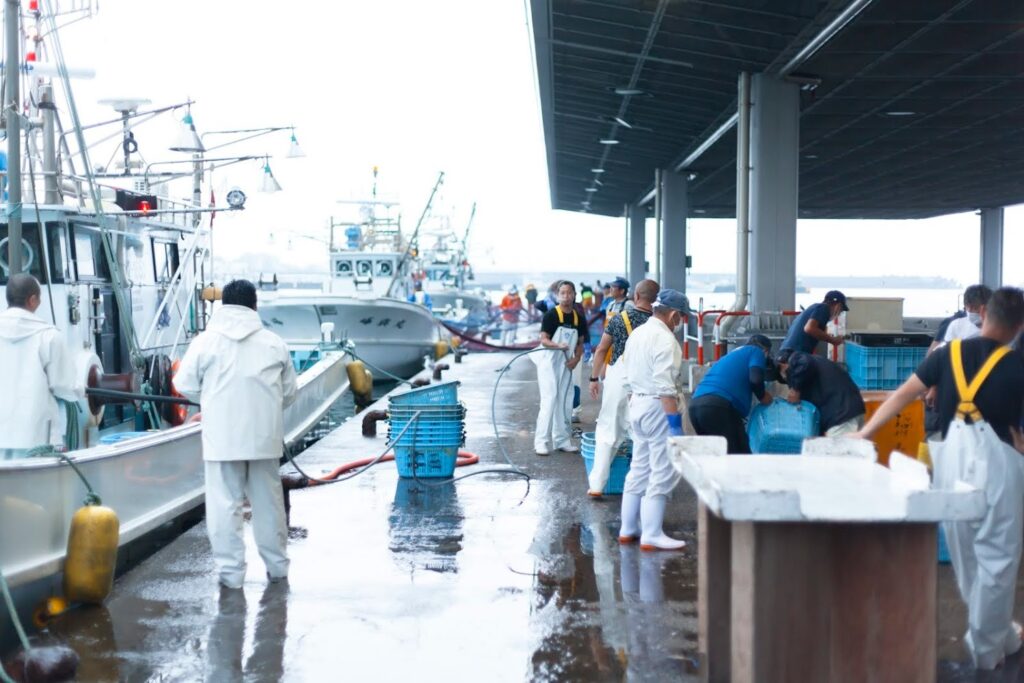
A similar partnership took shape along the coast of Toyama Bay.
Here, people developed fisheries that worked with the sea rather than against it. One example is the Ecchu style fixed net fishery, designed to catch fish in appropriate quantities while minimizing damage.
Fishermen also refined how fish were handled after the catch. Fish brought in from offshore are chilled in seawater ice and landed in a condition close to nozime. They are neither fully alive nor rigid from rigor mortis. Decisions about when to process them are left to chefs, delivering fish with a wide margin for skill and interpretation. This practice reflects a long standing effort to honor both the sea and those who work with its bounty.
The partnership extended beyond marine fish. Cherry salmon migrating upriver were used to make masu sushi, a form of pressed cherry salmon sushi, while ayu, or sweetfish, were preserved as narezushi, a fermented style regarded as the origin of sushi. River and sea were treated as part of a single food system.
As a port of call for the Kitamaebune trading ships, Toyama also became a crossroads for ingredients and seasonings from across Japan, including kelp, soy sauce, salt and vinegar. These influences were woven into a local food culture grounded in respect for natural abundance.
After World War II, Toyama developed its own nigiri sushi tradition under the influence of Edo style sushi. Today, that same partnership continues to evolve, producing restaurants that earn Michelin stars.
Toyama’s sushi culture stands as the result of an ongoing partnership between nature and people, shaped by a 4,000-meter or about 13,120-foot elevation difference and sustained by generations of patience, labor and creativity.
We live today as part of that partnership, continuing the collaborative work with nature that defines Toyama.
Photo by Masafumi Kashi
SHARE to SNS