Kombu Cured Nigiri Sushi
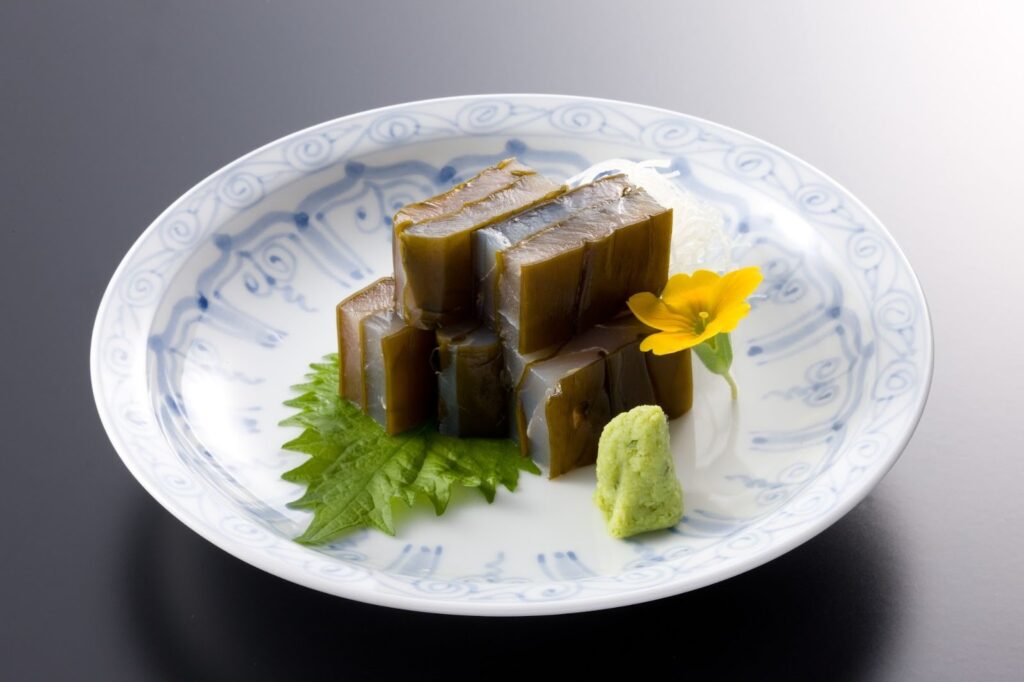

Nigiri sushi that highlights the synergistic umami born in Toyama Prefecture, Japan’s top consumer of kombu (kelp) by prefecture.
Toyama Prefecture ranks first in Japan in kombu consumption by prefecture, and kombu is widely used in local sushi restaurants, both for kombu curing and as the base for clear soups and dashi.
Kombu curing, or kombu jime, is a traditional technique in which fillets of fish or seafood are sandwiched between sheets of kombu and allowed to rest. During this process, glutamic acid from the kombu transfers to the fish through gentle moisture exchange, creating a powerful umami synergy that enhances the fish’s natural flavor (inosinic acid).
While kombu-cured fish is often enjoyed on its own, it is also used as a topping for nigiri sushi. In Toyama, kombu-cured seafood is hand-pressed with vinegared rice made from locally grown Toyama rice and seasoned with proprietary vinegar blends unique to each restaurant.
In recent years, makombu (Japanese kelp) has been cultivated in coastal waters off Shinminato Port in Toyama Bay. Historically, however, kombu was brought to Toyama from Hokkaido by kitamaebune, merchant trading ships that traveled the Sea of Japan from the Edo period (1603–1868) through the Meiji period (1868–1912).
Along the Toyama Bay coast, many ports flourished as stopovers for these vessels. Through this active kombu trade, a sophisticated culture of kombu use took root in Toyama, becoming an essential foundation of its sushi and broader food culture.
Photo courtesy of Toyama Tourism Organization
SHARE to SNS