Masu Sushi
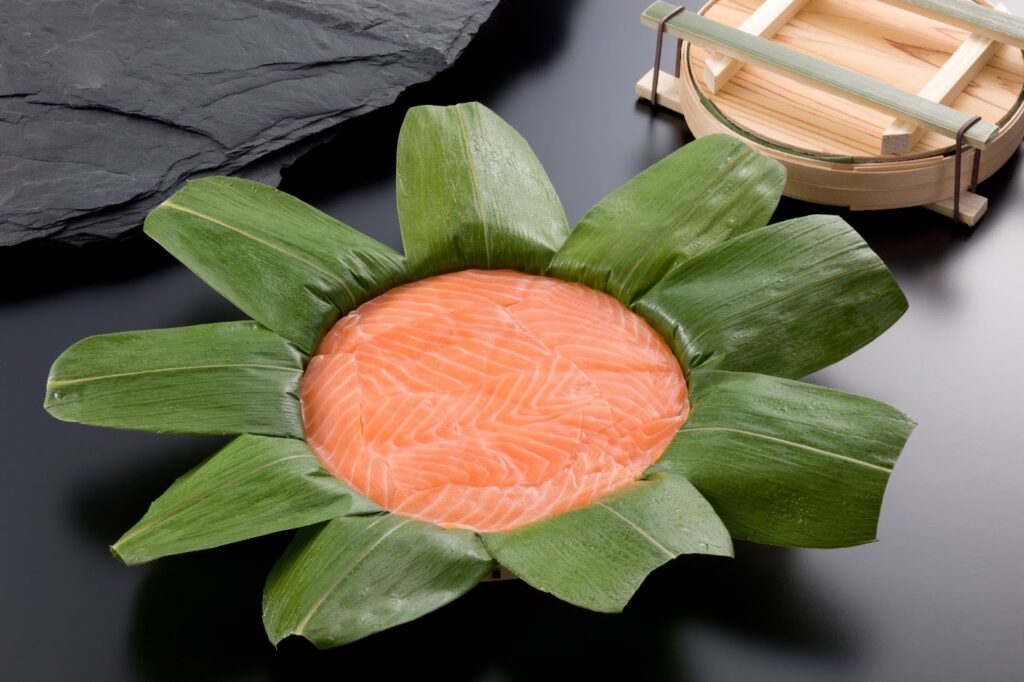

A regional pressed sushi born in the Edo period (1603–1868) and refined into Toyama’s most iconic souvenir.
Masu sushi is a type of oshi sushi, or pressed sushi. Vinegared rice is spread over bamboo leaves laid inside a round wooden mold, topped with fillets of trout that have been salted and lightly pickled in vinegar. The mold is then covered with a lid, weighted with a stone, and pressed for about five minutes to set its shape.
Because the fermentation process is omitted and sourness is achieved through seasoned vinegar, masu sushi is classified as haya zushi, or fast sushi.
Today, several dozen masu sushi makers still operate across Toyama Prefecture. Residents are deeply particular about details such as the balance of acidity and sweetness in the rice, the thickness of the trout, and how the fish and rice are layered. Many locals regularly purchase masu sushi from their favorite shops, while it is also widely enjoyed as a souvenir and as a popular ekiben, or station boxed meal.
To eat it, the lid is opened, the bamboo leaves are peeled back, and the round sushi is sliced like a cake with a knife. Some people enjoy it plain, while others add a light dip of soy sauce.
The origins of masu sushi date back to the Edo period (1603–1868), when a samurai of the Toyama Domain prepared sushi using river fish from the Jinzu River, one of Toyama’s major rivers, and presented it to the domain lord.
Until the Meiji period (1868–1912), as much as 160 metric tons of cherry salmon were caught annually in the Jinzu River. However, river engineering projects and changes in water quality led to a sharp decline in catches. Today, juvenile fish raised through artificial hatching are released to sustain the population.
SHARE to SNS