Maki / Temaki (Sushi Roll / 巻き寿司): What’s the Difference Between Maki, Nigiri and Sushi?
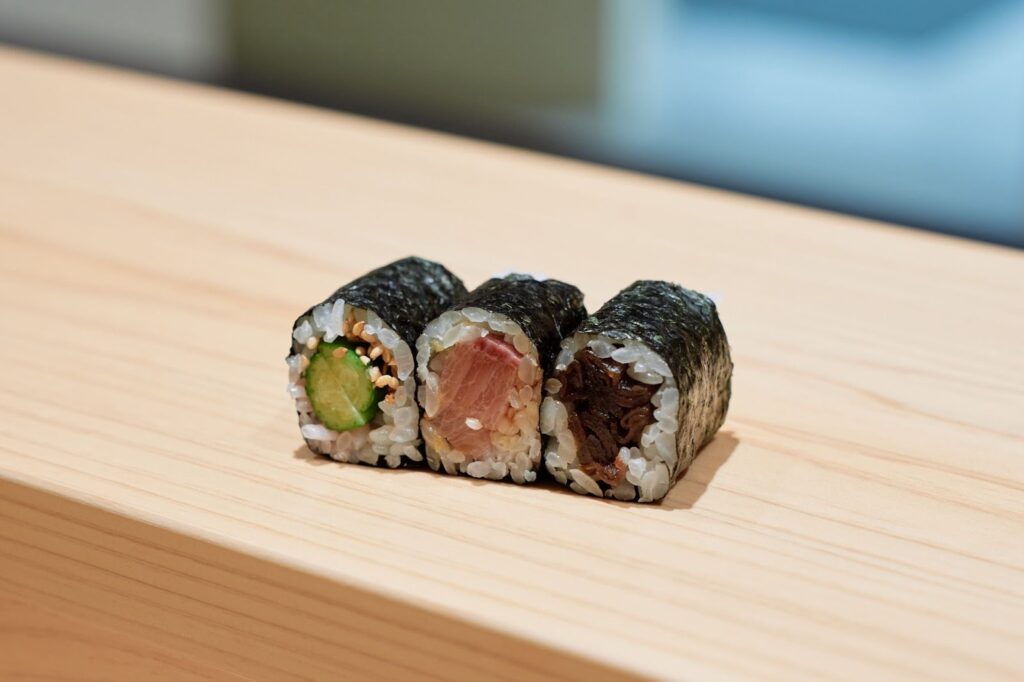

Maki, or maki sushi meaning sushi rolls, is one style of sushi. It’s easy to get confused about the difference between maki, nigiri, and sushi, but sushi is just the general category, and maki and nigiri are styles within it. Futomaki, hosomaki, norimaki, and temaki are all variations of maki sushi. In this article, you’ll learn how sushi is categorized and what “maki” means in that lineup. Knowing this will help you enjoy maki sushi even more.
What’s the Difference Between Maki, Nigiri and Sushi?
Maki, or maki sushi, is one kind of sushi. Nigiri is another. Sushi is a general term that covers many styles, including maki, nigiri and chirashi. The word maki is simply an abbreviation of maki sushi.
Maki is made with vinegared rice, a sheet of lightly toasted seaweed called nori, and various types of seafood or vegetables.
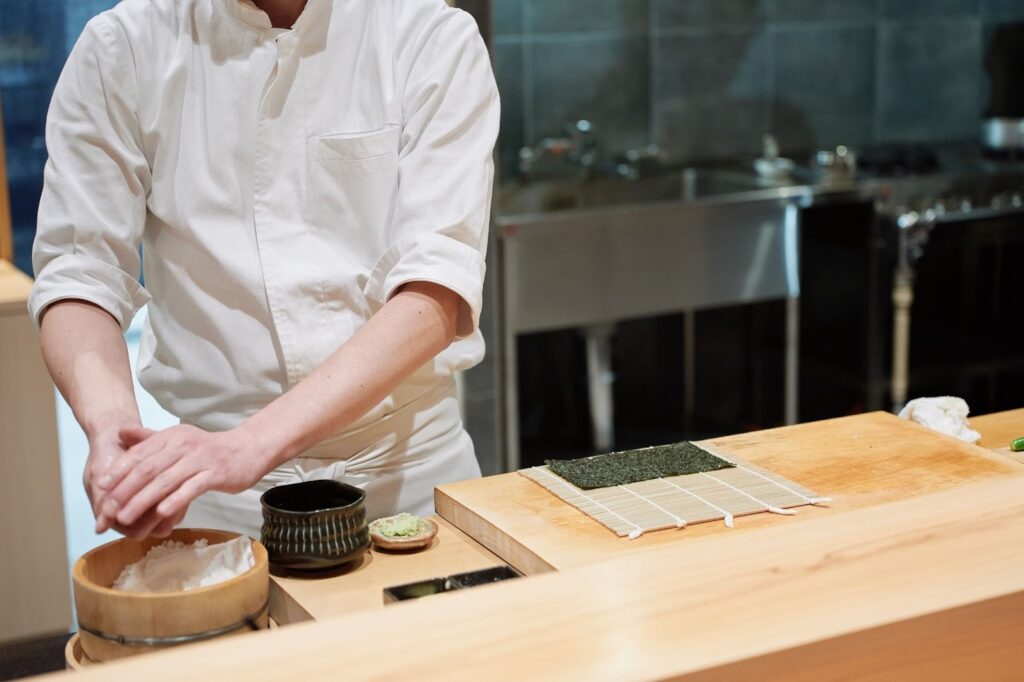
To make it, a sushi chef places a thin bamboo mat under the nori, spreads vinegared rice on top, adds the fillings, and rolls everything into a cylinder. The roll is then sliced into bite-size pieces.
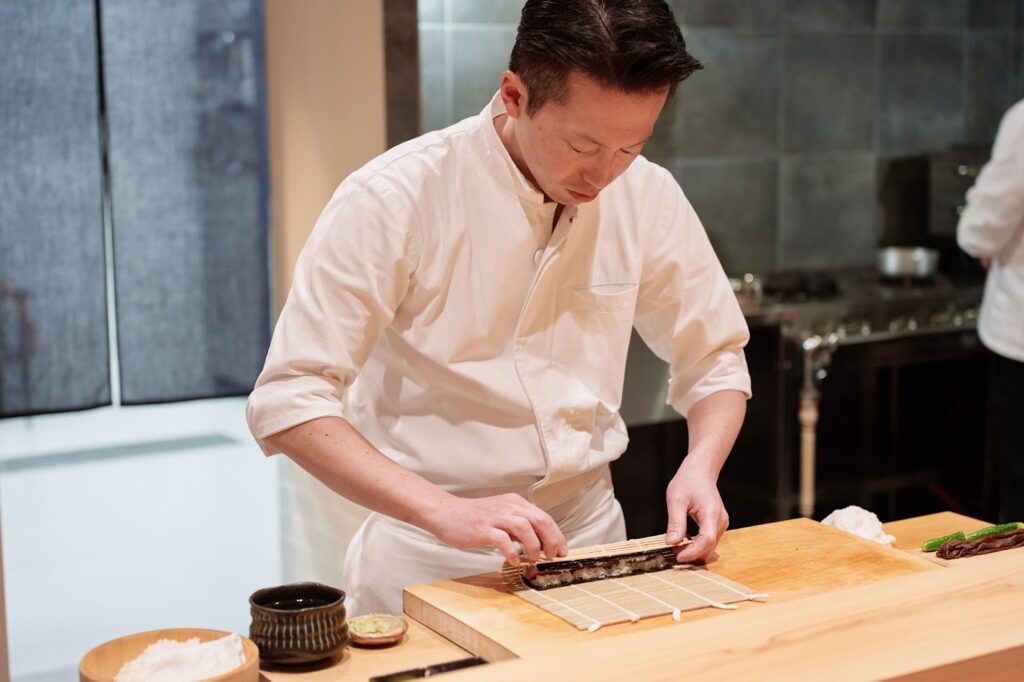
There are several variations of maki. Futomaki refers to a thick roll, while hosomaki is a thin roll with fewer ingredients.Maki sushi is also known as norimaki and temaki. Norimaki is another name for maki sushi wrapped in nori. Temaki refers to hand-rolled sushi, shaped into a cone without using a bamboo mat and eaten by hand.
What Does “Maki” Literally Mean as a Food Term?
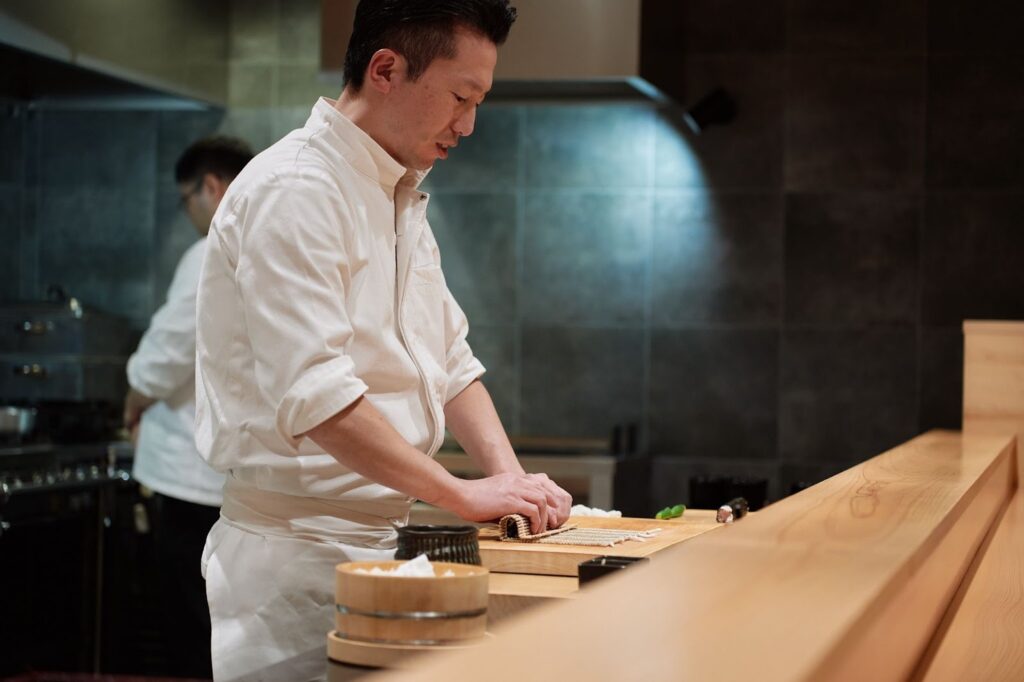
The word maki in maki sushi means “roll.” It refers to a type of sushi in which vinegared rice and various fillings are rolled using seaweed, thin sheets of tororo kombu (shredded kelp) or thin slices of omelet.
The term maki sushi first appeared in the cookbook Ryōri Sankai Kyō, published in 1750. Another cookbook, Shinsen Kondate Burui-shū, published in 1776, introduced sushi rolls that are nearly identical to modern makizushi. This suggests that sushi rolls were invented in Japan in the mid-18th century.Regional preferences also developed. In the Tokyo area, or the Kanto region, thin rolls with a single ingredient, known as hosomaki, became popular. In the Osaka area, or the Kansai region, thicker rolls with multiple ingredients, called futomaki, were preferred.
Typical Maki Sushi Menu Items
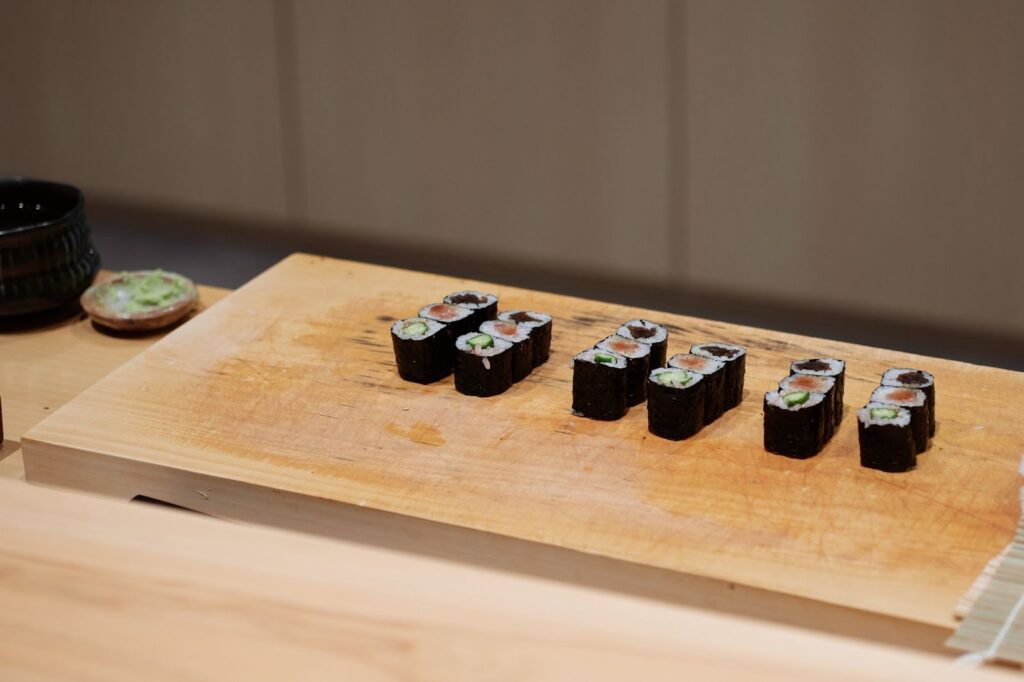
Some of the most popular types of maki, especially hosomaki, or thin rolls, include tekkamaki (tuna roll), kappamaki (cucumber roll) and kanpyomaki (gourd roll).
For futomaki, or thick rolls, a wider variety of ingredients is used. Common fillings include thick slices of omelet, simmered gourd and assorted vegetables, all rolled together into a hearty sushi roll.
Common maki varieties
Tekkamaki (Tuna roll): a thin roll filled with tuna.
Kappamaki (Cucumber roll): a thin roll filled with long, thin slices of cucumber.
Negitoro maki (Minced tuna and green onion roll): a thin roll made with fatty or scraped tuna mixed with green onions.
Kanpyo maki (Dried gourd roll): a thin roll filled with sweetened, simmered dried gourd, known as kanpyo, made from the fruit of the yuugao plant.
Shinko maki (Pickled radish roll): a thin roll filled with pickled daikon radish, or takuan.
Ume shiso maki (Plum and perilla leaf roll): a thin roll filled with mashed pickled plum and a shiso leaf.
Natto maki (Fermented soybean roll): a thin roll filled with fermented soybeans, known as natto.
Tamago maki (Sweet egg omelet roll): a thin roll filled with slices of sweet omelet.
Sarada maki (Salad roll): a thick roll primarily filled with fresh vegetables such as lettuce.
Ehomaki (Good fortune roll): a type of futomaki with multiple ingredients, traditionally eaten while facing a lucky direction during Setsubun.
Maki Sushi FAQs
What’s the Difference Between Sushi Rolls and Maki Rolls?
In English, sushi rolls and maki rolls refer to the same thing. The word maki means “roll” in Japanese and is also an abbreviation of maki sushi, the term used for sushi rolls.
Can I Order Maki at Any Sushi Restaurant or Sushi Bar?
In Japan, sushi rolls are served at almost any sushi restaurant or sushi bar and are among the most familiar items on the menu. They are also widely available outside restaurants and can be purchased at convenience stores, supermarkets, department store food halls, and kiosks at train stations and airports.
Is the California Roll Considered Maki?
The California roll can be considered maki sushi. It is an adaptation of traditional Japanese-style maki sushi, developed in the United States.
Experience a Variety of Maki Styles
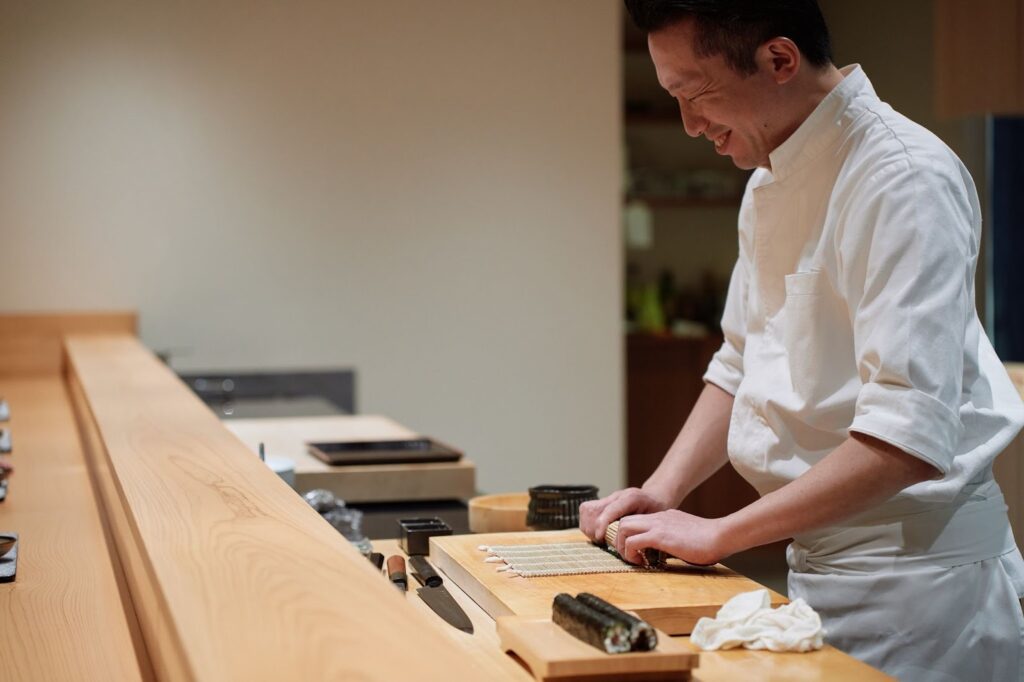
Maki sushi comes in many variations and can be enjoyed at almost any sushi restaurant or sushi bar, as it is a familiar item on the menu. It is often served or ordered toward the end of a meal. Ordering maki sushi after enjoying a variety of nigiri is a common practice among sushi lovers. Try it and enjoy the experience.
For those looking for delicious maki or maki sushi nearby, click this Sushi Near Me map.
Research Sources
・ Kodansha International. The Kodansha Bilingual Encyclopedia of Japan. Kodansha, Tokyo, Japan.
・ Kawahara, Kazuhisa. 読む寿司オイシイ話108ネタ. Bungeishunju, Tokyo, Japan.
・ Iwanami Shoten. 広辞苑. Iwanami Shoten, Tokyo, Japan.
・ Heibonsha. 改定新版 世界大百科事典. Heibonsha, Tokyo, Japan.
・ Japan Tourism Agency. Sushi JTA Sightseeing Database. Japan Tourism Agency, Tokyo, Japan.
SHARE to SNS