Kabura Sushi
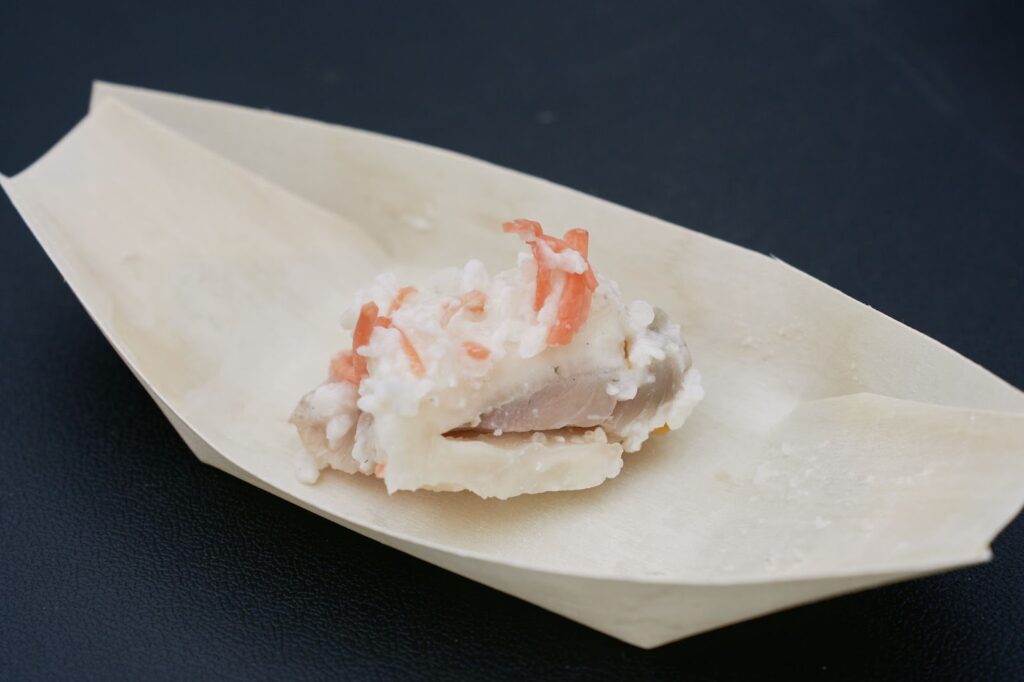

An indispensable New Year dish in Toyama and Ishikawa, resembling a turnip pickle and deeply rooted in local food culture.
Kabura sushi is a type of narezushi, a traditional fermented dish enjoyed in Toyama and Ishikawa during the year-end and New Year season. The word kabura means turnip, and the dish is especially associated with Wase Ōkabu, an early-maturing large turnip grown in the Otogawa area of Fuchu, Toyama City.
Narezushi, considered the prototype of sushi, is a preserved food made by salting fish, layering it with rice, pressing it under weights, and allowing lactic acid fermentation to occur. In the case of Kabura sushi, however, the method is closer to pickling. Turnips are sliced, lightly salted, and rested overnight, then filled with vinegared yellowtail or mackerel. Rice malt (kōji), chili pepper, and yuzu are added, after which the ingredients are coated with additional rice malt and cooked rice, pressed under weights, and fermented for about one week.
Compared with long-fermented narezushi, Kabura sushi, which uses rice malt, has a gentle and rounded flavor. While it retains a noticeable acidity, its mild taste has made it popular among people of all ages in Toyama and Ishikawa.
The origins of Kabura sushi are said to date back to the mid-Edo period (circa 1700–1750). The writer Kyōka Izumi (1873–1939), a native of Kanazawa, mentioned it as “turnip sushi” in his work Sunjo Fudoki (1920), suggesting that the dish was already well established by the early 20th century.
Photo by Kenta Nakajima
SHARE to SNS