Mackerel and Ayu Narezushi
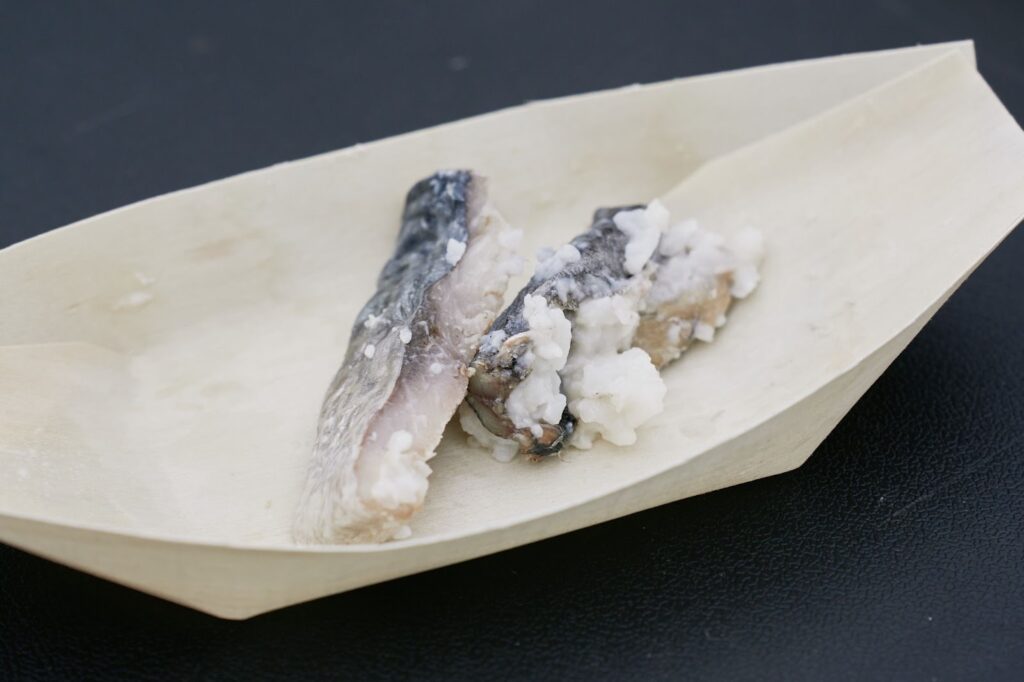

A form of fermented sushi with more than 1,000 years of history, regarded as the origin of sushi.
Narezushi represents the prototype of sushi, with a history spanning over 1,000 years. It is a preserved food made by salting fish, layering it with rice or millet, pressing it under weight, and allowing it to mature and ferment over several months to about one year.
It is characterized by a distinctive aroma and sharp acidity created through fermentation. One commonly cited theory holds that the word sushi derives from an older term meaning sour, making narezushi the true starting point of sushi culture.
Narezushi is believed to have originated in Southeast Asia and to have reached Japan together with wet rice cultivation before the Nara period, which lasted from 710 to 794. In Toyama, it has long been part of local foodways, using river fish such as ayu, or sweetfish, as well as marine fish such as mackerel.
At Inami Betsuin Zuisenji in Nanto City and at Johana Betsuin Zentokuji, both temples with histories of around 600 years dating back to the fifteenth century, mackerel narezushi is still served today. It is offered as otoki, a midday ceremonial meal, during events such as illustrated sermons on the life of Prince Shotoku and mushiboshi ho-e, occasions when historical documents and temple treasures are aired and displayed to the public.
Kabura sushi, traditionally eaten during the New Year season in Toyama and Ishikawa, is also a type of narezushi, reflecting the continued presence of this ancient fermentation culture in everyday life.
Photo by Kenta Nakajima
SHARE to SNS